/ Overview:
The renders and concepts that get a product stocked, a space signed off or a raise closed, before you've spent on a shoot or a build.
At Saltco, brands work directly with the two founders, who come from opposite ends of the same problem. One started in brand and digital, the other is an ARB-registered architect and interior designer. That second half matters more here than anywhere: Rufus models a product or a space with an architect's precision, so what people see is close to the finished thing.
Founders come to us for the moment before anyone commits. A retailer deciding whether to stock you, an investor deciding whether to back you, a venue deciding whether to hand over its space, all of them want to see it first. And beyond the pitch, we produce ongoing product and campaign imagery entirely in render, so brands can build out content without the cost of repeat shoots.

Renders, concepts and brand worlds, modelled with an architect's precision.
What we offer

01 Product renders
02 Spatial concepts and CGI
03 Brand world-building
04 Investor and retailer visuals
05 Visualisation content packages
06 Still and animated visuals
How we work
We start from a real model, never a prompt. Because Rufus is an architect, the product or space is modelled in full detail first, then visualised with AI tools, then finished by hand in Photoshop. That layered approach holds detail a single prompt never will, down to how light catches a bottle or how a material reads under gallery lighting.
For the commercial moments, that means showing a retailer or a venue exactly how their space will change under a brand takeover, the colours, the fittings, the feel, or showing a stockist how a product will actually sit on their shelf. It is especially important for luxury locations, where a partner needs to see the finished picture before they'll say yes.
Content, without the cost of a shoot every time
For brands that need imagery regularly rather than once, we run visualisation packages: an agreed set of product renders and campaign imagery each month, art-directed to a content plan. It gives a brand a steady flow of fresh creative for its social and retail channels, without the cost and lead time of repeat shoots.
The benefit of visualising projects early
Most studios only visualise at the tail end of a design process. We do it from the start, and it changes how a project runs:
Cost certainty - manufacturers pricing a build from renders and spatial drawings can quote far more accurately
Fewer iterations - clients, stockists and investors buy into a design faster when they can see it, so it changes less later
Faster projects - the concept phase is longer, but the whole process is shorter, because everyone knows what they're getting
Stronger pitches - investors get behind a brand, product or space far more readily when they can see it as if it were already built
Visualisation that helps people see the idea sooner
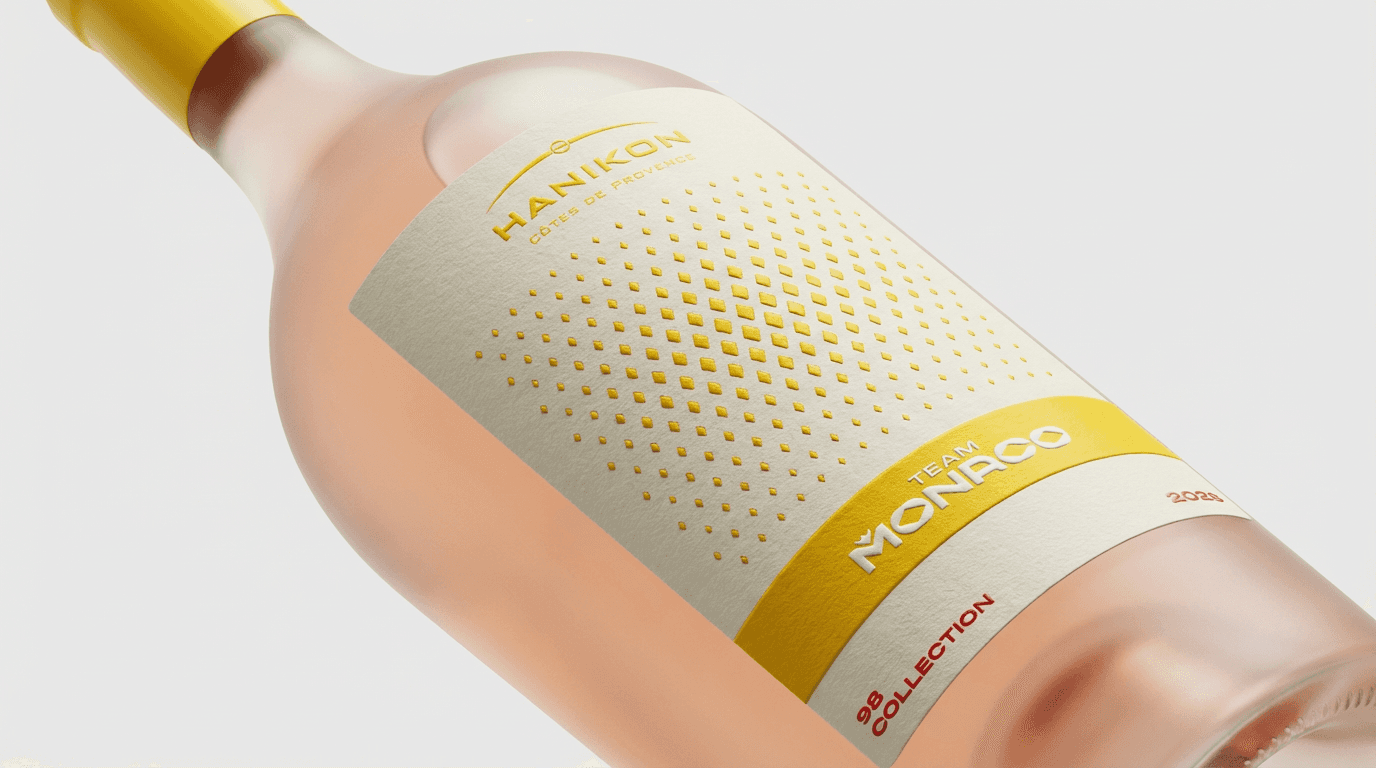
For Hanikon Rosé we built the brand world across three location typologies, City, Ski and Beach, each with modular activation concepts at varying investment levels, used to pitch to global stockists and venues like Harrods and Selfridges. We then expanded into bespoke visualisations for the Chrome Hearts collaboration and the E1 Team Monaco limited-edition bottles, pitched into the team before a single unit was made.
For Long Lane, we used CGIs through the design process to test different looks, materiality and scale for a luxury wellness members' club, then produced marketing-quality visuals for the investment deck that helped secure £7 million to build it. For Hampton and Richmond, we started with floorplans and massing models to explore interventions in a sensitive stadium site, then developed detailed visuals to test materiality and to bring planners, investors, fans and staff along with the project.
And Self Glow by James Read came to us before it was a product, when the renders and pitch decks together helped raise an initial £2 million with no stock and no store to point to, and again three years on to support the round-two raise to scale globally.